Bilateral Coordination Pointing Game: A Practical Tool for Visual-Motor Development
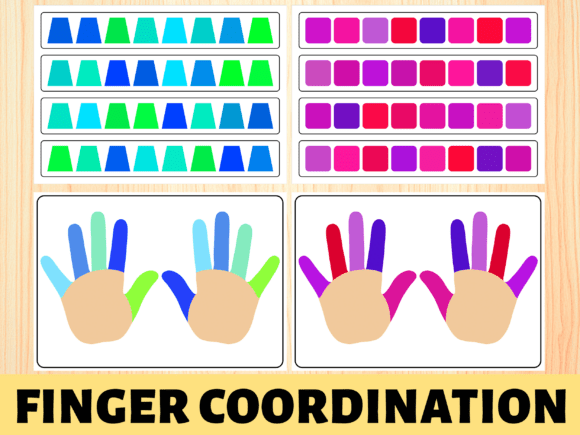
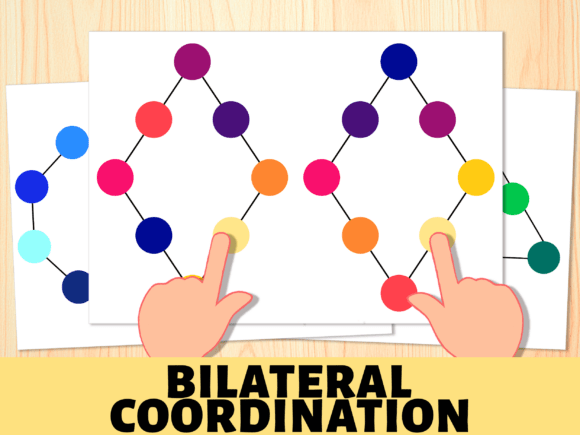
The Bilateral Coordination Pointing Game is a printable activity pack designed to help children develop essential motor and cognitive skills through a structured, engaging format. It offers 100 pages of visual exercises where children use both index fingers simultaneously to locate and point to matching colored circles on either side of the page. This bilateral action supports the development of hand-eye coordination, visual tracking, and motor planning. The game is particularly useful for occupational therapists, educators, and parents seeking a no-prep, ready-to-print solution for skill-building activities.
How It Works and What Makes It Unique
Each page in the Bilateral Coordination Pointing Game presents a vertical sequence of colored circles on both the left and right sides. The child follows a pattern by identifying and touching the same color on both sides at the same time. This simultaneous bilateral movement encourages brain integration and strengthens the connection between both hemispheres. The activity is simple to implement, requiring no additional materials beyond a printed page and a flat surface.
What sets this resource apart is its focus on dual-hand engagement without requiring writing or drawing skills. This makes it accessible to younger children or those with limited fine motor control. The inclusion of 10 different shape and color themes provides variety, which helps maintain interest across repeated use. Unlike many other visual-motor worksheets, this game emphasizes timing and coordination rather than accuracy alone.
Comparing Bilateral Coordination Tools
There are several approaches to developing bilateral coordination in children. Traditional tools include scissors activities, stringing beads, and two-handed puzzles. These methods often require direct supervision, physical materials, and more setup time. In contrast, the Bilateral Coordination Pointing Game is a digital download that can be printed and used immediately, making it ideal for busy professionals or home users who need flexibility.
Other digital tools may include tablet-based apps that track eye or finger movement. While these offer interactive feedback, they also require screen time, which may not be suitable for all children or settings. The Bilateral Coordination Pointing Game avoids screen exposure entirely, focusing instead on tactile and visual engagement through paper-based interaction.
Strengths and Limitations
One of the key strengths of the Bilateral Coordination Pointing Game is its accessibility. It requires minimal preparation and can be used in a variety of environments: therapy clinics, classrooms, or at home. The format supports both individual and small-group activities and can be easily integrated into existing lesson or therapy plans. The structured progression of color patterns also allows for gradual skill development.
However, the game does have limitations. Since it focuses primarily on pointing and visual tracking, it doesn’t provide tactile or manipulative experiences that other bilateral tools might offer. Additionally, the activity may not be sufficient on its own for children with more complex motor or sensory needs. It works best as part of a broader developmental strategy rather than a standalone solution.
When This Game Is the Right Choice
The Bilateral Coordination Pointing Game is particularly well-suited for children aged 3–7 who are beginning to develop bilateral coordination skills. It’s also effective for children who may struggle with tasks that require both hands to work together, such as holding paper while writing or using scissors. Because it doesn’t require writing or coloring, it's ideal for children who may find those tasks frustrating or fatiguing.
Therapists and educators may find this game especially useful in settings where time and materials are limited. For example, it can serve as a warm-up activity before more complex motor tasks or as a center-based station in a classroom. It also works well for parents looking to support their child’s development at home without purchasing specialized equipment.
Alternatives and Complementary Tools
For children who need more sensory input or physical manipulation, alternatives such as scissor skills worksheets, bilateral drawing activities, or two-handed play with clay or blocks may be more appropriate. These tools provide additional tactile and kinesthetic experiences that the pointing game does not include.
Visual tracking apps or digital games can also serve a similar purpose but introduce screen time into the equation. These options may be better for children who are already comfortable with technology and benefit from auditory or animated feedback. However, for those who respond better to physical interaction or need to reduce screen exposure, the Bilateral Coordination Pointing Game offers a valuable alternative.
Best Practices for Implementation
To get the most out of the Bilateral Coordination Pointing Game, it’s helpful to introduce it in short, consistent sessions. Five to ten minutes per session is often enough to maintain engagement while building endurance. Encouraging children to verbalize the colors or count as they go can also add a language or math component to the activity.
Therapists may choose to pair the game with other bilateral coordination tools to create a more comprehensive activity plan. For example, after a session with the pointing game, a child might move on to threading beads or using tongs to pick up small objects. This layered approach supports both visual-motor and fine motor development.
Final Thoughts
The Bilateral Coordination Pointing Game is a practical, research-aligned tool that supports the development of key motor and cognitive skills. It stands out for its simplicity, accessibility, and focus on dual-hand engagement without requiring writing or drawing. While it may not replace more tactile or sensory-rich activities, it serves as a valuable addition to a broader toolkit for therapists, educators, and parents.
When evaluating resources for bilateral coordination, consider the child’s current abilities, sensory preferences, and learning environment. The Bilateral Coordination Pointing Game is best suited for those who benefit from low-prep, screen-free visual-motor activities that can be easily repeated and adapted over time.