Fractions Matching Game Visual Math: Turning Concepts into Hands-On Learning
Bringing Fractions to Life Through Visual Engagement
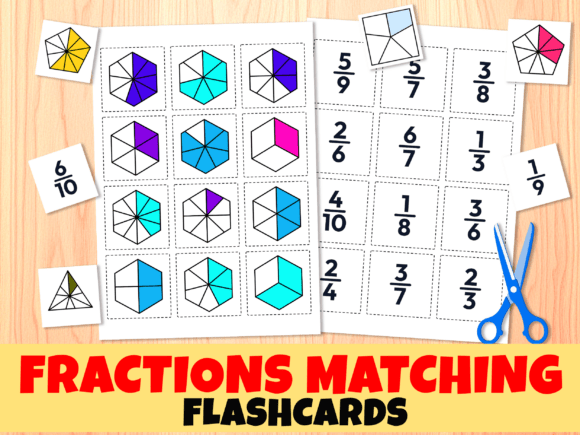
The Fractions Matching Game Visual Math is a dynamic 50-page educational resource designed to transform how students understand and interact with fractions. Instead of relying on abstract explanations or repetitive worksheets, this game introduces a tactile, visual approach to learning. By matching geometric shapes—like pie charts, hexagons, and triangles—with their corresponding numerical fractions, students develop a stronger conceptual grasp of fraction values and relationships.
This hands-on method encourages active learning, allowing students to physically manipulate cards that represent fractions in different forms. Whether used in a classroom setting or at home, the game promotes deeper engagement and retention by turning math into a playful, interactive experience.
How the Game Works
- Print: The PDF includes full-color pages featuring visual representations of fractions (like shaded polygons) and separate pages with numerical values.
- Cut: Dotted lines make it easy for students to cut out square cards, integrating fine motor skill development into the learning process.
- Match: Students shuffle the cards and begin matching visual shapes with their corresponding numerical fractions—for example, pairing a hexagon half-shaded with the 1/2 card.
This process reinforces key math skills such as visual discrimination, numerator and denominator recognition, and the ability to identify equivalent fractions across different shapes. The game can be played individually, in pairs, or as part of small group instruction, making it flexible for a variety of learning environments.
Key Features That Enhance Learning
- Diverse Shapes: Includes circles, pentagons, hexagons, squares, and triangles to ensure students recognize fractions in multiple contexts, not just standard pie charts.
- Self-Correction Tools: Teachers can print answer keys on the back of cards or use uncut pages as a reference guide, allowing students to self-check their work and learn independently.
- Multifunctional Use: Designed for use in math centers, small group interventions, or as independent practice, this game supports differentiated instruction.
- Motor Skill Integration: Cutting out the cards provides a built-in opportunity to practice fine motor skills, especially valuable for younger learners.
Who Benefits from the Fractions Matching Game Visual Math?
This resource is ideal for educators, homeschoolers, and parents looking to support students who struggle with abstract fraction concepts. It's particularly effective for:
- Visual learners: Who benefit from seeing fraction relationships in multiple shapes and forms.
- Younger students: Who are developing both math and motor skills simultaneously.
- Struggling learners: Who may need alternative methods to grasp foundational math concepts.
- Classroom teachers: Seeking engaging math center activities or intervention tools for small group settings.
By integrating tactile and visual learning, the Fractions Matching Game Visual Math meets diverse learning needs and encourages students to explore fractions in a low-pressure, enjoyable way.
Real-World Applications and Classroom Integration
In the classroom, this game can be used as a warm-up activity, a station during math rotations, or a review tool before assessments. Teachers can differentiate instruction by selecting specific fractions or shapes based on student readiness levels.
At home, parents can use the game to reinforce school lessons or introduce fractions in a fun, non-academic setting. It’s also an excellent tool for summer learning to prevent skill regression.
For special education settings, the game provides a multisensory approach that supports IEP goals related to number sense and fraction identification. It’s also useful for speech-language pathologists working on math vocabulary and comprehension.
Strengths and Considerations
Strengths:
- Highly engaging and interactive
- Supports multiple learning styles
- Encourages independent learning through self-correction
- Printable and reusable
Considerations:
- Requires printing and cutting, which may take time and resources
- Best suited for students with basic cutting skills (can be adapted with pre-cut cards or assistance)
- Not digital—requires physical handling and storage
Setting Practical Expectations
While the Fractions Matching Game Visual Math is a powerful learning tool, it’s most effective when used as part of a broader math curriculum. It’s not a standalone solution but rather a supplemental activity that reinforces key fraction concepts through practice and repetition.
Results may vary depending on student engagement and prior knowledge. However, consistent use—especially in varied formats (timed challenges, partner play, teacher-led review)—can significantly improve a student’s comfort and fluency with fractions.
Why This Game Stands Out
Many math games focus on speed or competition, which can overwhelm or discourage some learners. In contrast, the Fractions Matching Game Visual Math emphasizes understanding and visual discrimination, offering a calming, focused activity that builds confidence through mastery.
Its combination of tactile engagement, visual learning, and conceptual reinforcement makes it a standout among fraction resources. It bridges the gap between concrete and abstract thinking, helping students see math as something they can touch, explore, and understand—not just memorize.
Final Thoughts: A Valuable Addition to Any Math Toolkit
Whether you're a teacher, parent, or tutor, the Fractions Matching Game Visual Math is a versatile and effective tool for making fractions more accessible and engaging. By turning complex concepts into a simple, hands-on matching activity, it supports students in building a strong foundation in math that will serve them well in higher-level learning.
With its 50-page format, full-color visuals, and easy-to-use design, this resource is a worthwhile investment for anyone committed to helping students succeed in math—without relying on traditional worksheets or rote memorization.